
Menu
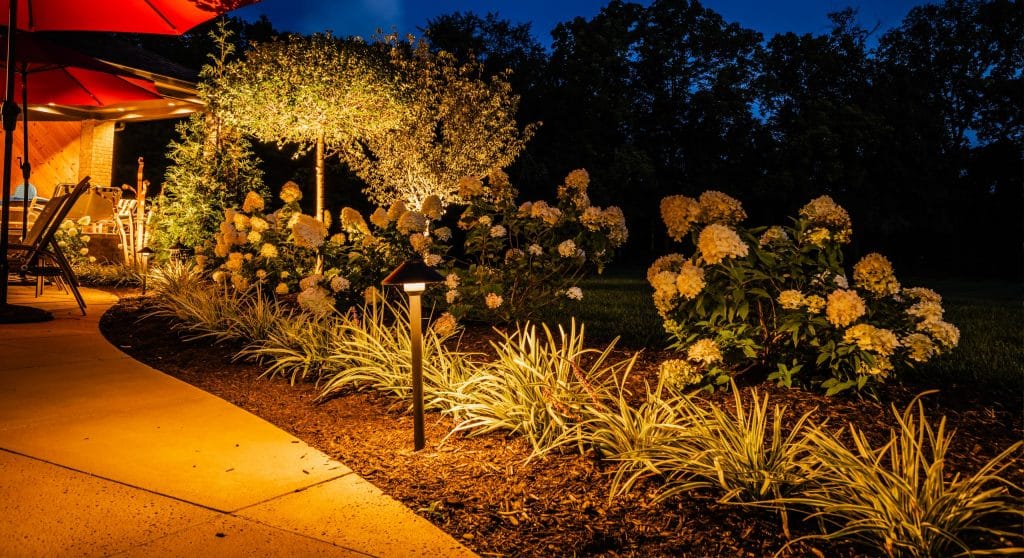
Understanding the three foundational landscape lighting techniques — and how to combine them for a professional, layered look on your Indiana home.
When people imagine landscape lighting, they usually picture fixtures and bulbs. But the real artistry of outdoor lighting isn't about the equipment — it's about the direction the light travels. The same tree, the same wall, the same garden can look completely different depending on whether the light comes from below, from above, or from high in the canopy.
Three techniques form the foundation of nearly every great landscape lighting design: uplighting, downlighting, and moonlighting. Understanding what each does, when to use it, and how they work together is the key to a design that looks intentional and professional rather than random and flat. This guide breaks down all three specifically for Indianapolis-area homes, where our dramatic seasons — from lush summer canopies to bare, snow-dusted winter branches — make the direction of light especially important.
Uplighting is exactly what it sounds like — fixtures placed at or below ground level, aimed upward. It's the most common and versatile landscape lighting technique, and for good reason. By casting light from below, uplighting creates drama, emphasizes height, and reveals the texture of whatever it illuminates.
Uplighting shines brightest when applied to trees, especially those with interesting bark, branching structure, or dense canopies. A well-placed uplight at the base of a mature oak or maple washes the trunk in light and lets the beam travel up into the branches, creating a striking focal point. It's equally effective on architectural features — stone columns, brick chimneys, entryway pillars — and on textured surfaces where grazing the light upward across the material emphasizes every ridge and shadow.
In Indianapolis, uplighting has a wonderful year-round quality. In summer, it lights full, leafy canopies for a lush, enveloping effect. In winter, when deciduous trees drop their leaves, that same uplight reveals the sculptural silhouette of bare branches against the night sky — a completely different but equally beautiful look. This seasonal transformation is one of the reasons uplighting is so valued in our climate.
The main caution with uplighting is glare. Fixtures must be positioned and shielded so the light source itself isn't visible from common sightlines, whether that's your windows, your patio, or the street. A professional design accounts for these angles carefully.
Downlighting reverses the direction, mounting fixtures up high and aiming them down toward the ground. Where uplighting is dramatic and focused, downlighting is practical and broad, washing an area in even, functional light.
This technique is ideal for illuminating usable spaces — patios, decks, outdoor kitchens, walkways, and driveways — where you need reliable, glare-free light to move around safely and comfortably. Downlighting also excels at lighting garden beds and ground-level plantings from above, revealing their color and form the way natural daylight would.
Fixtures for downlighting are commonly mounted on the eaves and soffits of the home, on pergolas and structures, or on posts and columns. Because the light comes from above and is aimed downward, glare is naturally minimized, making downlighting comfortable for the spaces where you actually spend time outdoors. For Indianapolis homeowners who use their patios and decks well into the cool evenings of spring and fall, downlighting extends the usability of those spaces beautifully.
Moonlighting is a specialized, particularly enchanting form of downlighting. Instead of mounting fixtures on the house, moonlighting places them high up within the branches of mature trees, aimed downward so the light filters through the canopy and casts dappled, shifting shadows on the ground below — exactly the way a full moon does on a clear night.
The result is subtle, natural, and magical. Rather than announcing itself, moonlighting creates ambiance that most people can feel but can't quite identify the source of. It bathes patios, lawns, and pathways in soft, romantic light, and the pattern of leaf shadows adds a living, organic quality that no other technique can replicate.
Moonlighting requires mature trees with substantial canopies, which many established Indianapolis neighborhoods have in abundance. It's an especially popular choice on the wooded lots and estate properties found in areas like Zionsville, Geist, and the older sections of Carmel. One seasonal note: because moonlighting depends on the canopy, the effect is fullest in summer and shifts dramatically in winter when the leaves are gone — though the bare-branch shadows can be strikingly beautiful in their own right.
The secret that separates professional landscape lighting from amateur attempts is layering. No single technique creates a compelling nighttime landscape on its own. Rather, the magic comes from combining uplighting, downlighting, and moonlighting so that light appears at multiple heights and from multiple directions, giving the scene genuine depth and dimension.
A well-designed Indiana home might use uplighting to create dramatic focal points on specimen trees and architectural features, downlighting to make patios and pathways safe and usable, and moonlighting from a few mature trees to tie the whole yard together with soft, ambient glow. When these layers are balanced correctly, the eye moves naturally through the landscape, discovering highlights and resting in gentle shadows, exactly as it would in a beautifully lit interior room.
Layering also solves the "flat" problem that plagues DIY installations. When every fixture points the same direction at the same intensity, the result feels one-dimensional and monotonous. Varying the direction, height, and brightness of light is what creates the rich, professional look homeowners are after.
The best mix of techniques depends entirely on your specific landscape. Homes with mature specimen trees are perfect candidates for uplighting and moonlighting, while properties with expansive patios, decks, and outdoor living areas benefit most from downlighting. Most Indianapolis homes call for a thoughtful combination, weighted toward whichever features and spaces matter most to the homeowner.
This is exactly why a nighttime demonstration is so valuable. Seeing how uplighting transforms your particular trees, how downlighting washes your actual patio, and how moonlighting filters through your specific canopy removes all the guesswork and lets you design around your property's unique character.
What's the difference between downlighting and moonlighting? Moonlighting is a specific type of downlighting where fixtures are mounted high in trees to mimic natural moonlight filtering through the canopy. General downlighting can come from the house, structures, or posts and is aimed at illuminating specific areas like patios and walkways.
Which technique is best for lighting trees? Uplighting is the classic choice for showcasing a tree's trunk, bark, and branching structure, while moonlighting from within a mature tree creates soft, natural shadows below. Many designs use both on the same tree for a layered effect.
Does uplighting work in winter when trees are bare? Yes, and it can be stunning. Uplighting bare deciduous branches reveals their sculptural silhouette against the sky, offering a completely different but equally beautiful look than the full summer canopy — a real advantage in Indiana's four-season climate.
Can I combine all three techniques? Not only can you, but you should. Layering uplighting, downlighting, and moonlighting is precisely what creates the depth and professional quality that distinguishes a great landscape lighting design from a flat, amateur one.
How do I avoid glare with uplighting? Proper fixture placement, aiming, and shielding keep the light source hidden from your typical sightlines — windows, patios, and the street. This is one of the key details a professional installer manages that DIY kits rarely address.
Understanding uplighting, downlighting, and moonlighting turns landscape lighting from a shopping decision into a design decision. The direction of light — and the way you layer those directions — is what gives your Indianapolis property depth, drama, and that unmistakable professional glow after dark.
Lite Outdoor designs custom, layered landscape lighting for homes throughout Indianapolis and the surrounding communities, combining uplighting, downlighting, and moonlighting to create nighttime landscapes with real dimension. We'll show you exactly how each technique transforms your property with an on-site nighttime demonstration.
👉 Schedule your free consultation and nighttime demonstration today at LiteOutdoor.com
Explore more in this series: start with our pillar guide, Outdoor Lighting Indianapolis: The Complete 2026 Guide, and continue with Best Landscape Lighting for Indianapolis Winters and Pathway & Driveway Lighting Ideas for Indiana Homes.
