
Menu
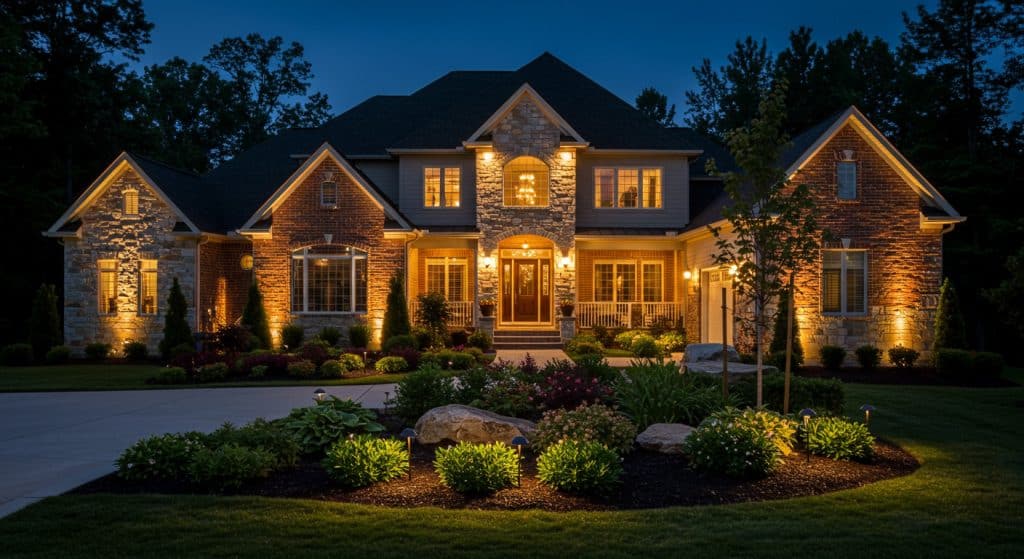
How to design an outdoor lighting system that survives — and shines through — Central Indiana's freeze-thaw cycles, subzero nights, and heavy snow.
Most homeowners think of landscape lighting as a summer luxury — something to enjoy on warm evenings around the patio. But in Indianapolis, winter is when your outdoor lighting truly earns its keep. By early July, we're still months from the first freeze, which makes right now the ideal time to plan an installation before the fall rush and the arrival of cold weather.
Here's the reality: it gets dark in Indianapolis before 5:30 PM for much of the winter, which means your lighting is on for the majority of your waking hours at home. Fresh snow reflects and amplifies every beam, turning your property into a glowing showcase during the bleakest, grayest months of the year. A well-designed system doesn't just endure winter — it makes winter beautiful.
The catch is that our climate is brutal on cheap equipment. Subzero temperatures, freeze-thaw cycles, road salt, ice storms, and heavy snow loads destroy budget fixtures within a season or two. This guide walks you through exactly what it takes to build a landscape lighting system engineered for Indianapolis winters.
Central Indiana sits in a climate zone that combines several punishing forces. Temperatures regularly swing from above freezing during the day to well below zero at night, and that repeated expansion and contraction is what cracks fixtures, loosens connections, and lets moisture seep in.
Freeze-thaw cycles are the single biggest enemy of outdoor lighting here. Water finds its way into tiny gaps, freezes, expands, and pries components apart a little more each time. Add ground heave, which physically pushes buried fixtures and cables as the soil freezes and thaws, and you have a recipe for failure in any system that wasn't built for it.
Then there's moisture. Melting snow, ice dams, and slush create standing water and constant dampness around ground-level fixtures and wire connections. Road and sidewalk salt, tracked and splashed onto nearby fixtures, accelerates corrosion on inferior metals. Any system installed in Indianapolis has to account for all of these at once.
The material your fixtures are made from is the number one factor in whether they'll survive an Indiana winter. This is where cutting corners costs you the most.
Solid brass is the gold standard for our climate. It expands and contracts with temperature swings without cracking, resists corrosion from salt and moisture, and develops an attractive patina over the years instead of degrading. A quality brass fixture can last 15 to 20 years or more in Indianapolis. Copper offers similar benefits and the same graceful aging, making it another excellent premium choice.
By contrast, cast aluminum and plastic fixtures — the kind found in most big-box store kits — tend to become brittle in the cold, crack during freeze-thaw cycles, and corrode quickly when exposed to salt. Even "powder-coated" aluminum eventually chips, and once moisture reaches the bare metal, failure follows fast. If a contractor quotes you a suspiciously low price, aluminum or plastic fixtures are almost always the reason.
Here's some good news: LEDs love the cold. Unlike the outdated halogen bulbs of a decade ago, LED lighting actually operates more efficiently in low temperatures, running cooler and often lasting even longer than it would in summer heat. A quality LED landscape system will deliver reliable performance all winter long.
That said, not all LEDs are equal. Look for fixtures rated for a wide temperature range and sealed against moisture. Pay attention to color temperature as well — warm white in the 2700K to 3000K range casts an inviting, natural glow that looks especially beautiful against snow, whereas cooler, bluer light can feel harsh and clinical outdoors. For most Indianapolis homes, warm white is the right choice.
Fixtures get all the attention, but the connections are where most winter failures actually happen. The twist-on wire nuts included in DIY kits are simply not built for buried, wet, freezing environments — they let moisture in, corrode, and fail.
A professional Indianapolis installation uses waterproof, direct-burial-rated connectors that fully seal each splice against water intrusion. Cable should be buried at an appropriate depth and routed to avoid areas of heavy snow removal and ground heave. Every junction should be sealed and, where possible, positioned to stay above standing meltwater. These details are invisible when the lights are on, but they are the difference between a system that lasts two seasons and one that lasts two decades.
The transformer is the heart of a low-voltage landscape lighting system, converting your home's 120V power down to a safe 12V. In our climate, it needs to be housed in a weatherproof, appropriately rated enclosure and mounted off the ground to stay clear of snow drifts and meltwater.
Sizing matters too. A transformer should have enough capacity to run your current fixtures comfortably while leaving room to expand later, and quality units include timers and photocell controls that automatically adjust to the shorter winter days — turning your lights on earlier as sunset creeps toward 5:00 PM in December.
Winter changes how light behaves in your landscape, and a smart design takes advantage of it. Snow acts as a giant reflector, bouncing light upward and brightening the entire scene, so you often need fewer fixtures than you'd expect to achieve a dramatic effect.
Uplighting evergreens, which keep their foliage all winter, gives you year-round structure and color when deciduous trees are bare. Downlighting or moonlighting from mature evergreens casts gorgeous dappled shadows across fresh snow. Grazing textured surfaces like stone chimneys, brick façades, and architectural columns adds depth that reads beautifully against a white backdrop. And because bare branches create their own natural artistry, uplighting deciduous trees in winter produces striking silhouette effects you simply don't get in summer.
Pathway lighting takes on added importance in winter, too. Icy walkways and driveways become genuine safety hazards, and well-placed path lights guide family and guests safely to the door while preventing slips and falls.
Even the best system benefits from a little seasonal attention. Before the first hard freeze, gently clear leaves and debris from around fixtures so meltwater can drain freely. After snowstorms, avoid piling shoveled or plowed snow directly on top of fixtures, and be careful with snowblowers and plows near fixture locations and buried cable runs. If a fixture gets knocked out of alignment by snow or ground heave, a quick adjustment restores the intended effect.
Most reputable Indianapolis lighting companies offer maintenance plans that handle all of this for you, including seasonal timer adjustments, connection checks, and realignment. Given how much stress winter puts on a system, an annual professional check-up is well worth it.
It's tempting to grab a lighting kit from a home improvement store and install it yourself over a weekend. In a milder climate, that might even work. In Indianapolis, it rarely does. Those kits combine the exact weaknesses this guide warns against: brittle aluminum or plastic fixtures, non-waterproof connections, undersized transformers, and low-quality LEDs not rated for extreme cold.
The result is a system that looks fine in October and starts failing by February — flickering fixtures, dark spots, corroded connections, and cracked housings. What seemed like a bargain becomes a frustrating cycle of replacements. A professionally designed and installed system using premium materials costs more upfront but delivers reliable beauty for decades, making it the far better long-term value.
Do LED landscape lights work in freezing temperatures? Yes, and they actually perform better in the cold. LEDs run more efficiently and often last longer in low temperatures, making them ideal for Indianapolis winters as long as the fixtures are properly sealed and rated.
Can landscape lighting be installed in winter? It can. While spring and fall are the most popular installation seasons, professionals can install year-round, and early summer — right now — is a great time to plan ahead and beat the fall rush before cold weather arrives.
Will snow damage my landscape lighting? Snow itself won't damage a quality, properly installed system. The real risks come from snow removal equipment and from piling plowed snow on top of fixtures, so it's best to keep fixture and cable locations in mind when clearing your property.
How long will a good landscape lighting system last in Indianapolis? A professionally installed system using solid brass or copper fixtures, waterproof connections, and quality LEDs can last 15 to 20 years or more, even with our harsh freeze-thaw cycles.
Why do my old landscape lights keep failing every winter? The most common culprits are cheap aluminum or plastic fixtures, non-waterproof wire connections, and LEDs not rated for extreme cold. Upgrading to premium, climate-appropriate materials solves the problem for good.
Don't wait for the fall rush or the first freeze to think about your landscape lighting. Summer is the perfect time to design and install a system built to shine through every season — including the long, dark, snowy months when you'll appreciate it most.
Lite Outdoor designs and installs premium landscape lighting engineered specifically for the Indianapolis climate, using solid brass and copper fixtures, waterproof connections, and cold-rated LEDs backed by real warranties. Our systems don't just survive Indiana winters — they turn them into your property's most beautiful season.
👉 Schedule your free consultation and nighttime demonstration today at LiteOutdoor.com
Explore more in this series: read our complete pillar guide, Outdoor Lighting Indianapolis: The Complete 2026 Guide, and continue with Pathway & Driveway Lighting Ideas for Indiana Homes and Low-Voltage vs. Line-Voltage Landscape Lighting.
