
Menu
Two fixtures can look identical in the catalog and behave very differently five years later.
When you start shopping for landscape lighting, you will run into two kinds of LED fixtures. Some have the LED built into the fixture, usually called integrated LED. Others take a replaceable lamp, often an MR16 or a small bi-pin bulb, the same way old halogen fixtures did. Both can work well. The right choice depends on what you value most.
The LED and its electronics are sealed inside the fixture body, which is designed to pull heat away from the LED.
The fixture is a housing with a socket, and you drop in an LED lamp.
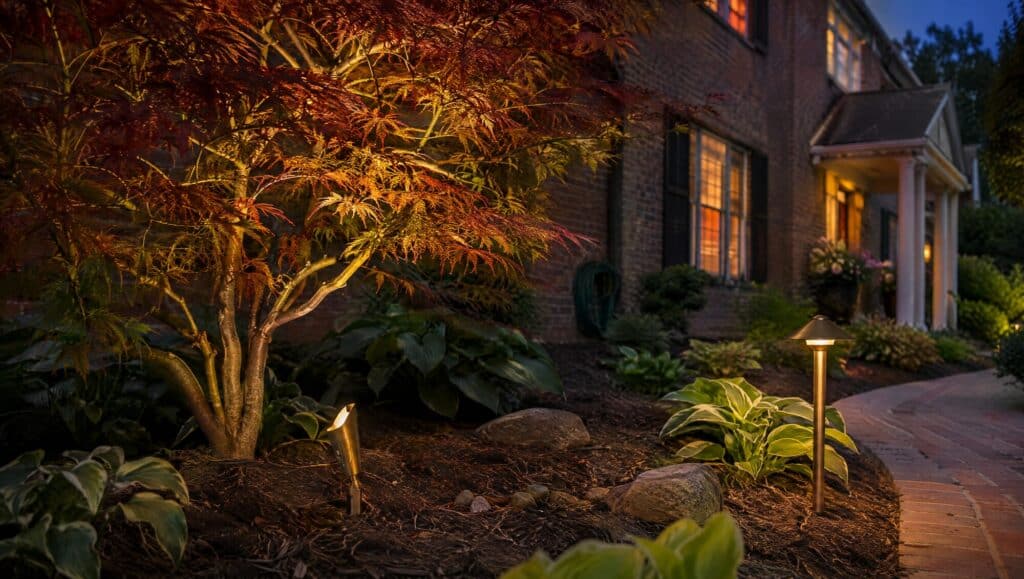
Many Zionsville homes have mature landscapes that keep growing and changing. A tree that needs a gentle light today may need a stronger, wider beam in ten years. For that reason, many designers like replaceable lamps in solid brass or copper housings for trees and facades, because the light can grow with the landscape. For path lights and step lights, where needs rarely change, a quality integrated fixture is a sensible choice.
Whichever you choose, the housing material matters as much as the LED. Solid brass and copper hold up to Indiana freeze and thaw cycles far better than thin aluminum or plastic.
Do integrated LED landscape lights last longer? Good ones often do, because they manage heat well. But a quality replaceable lamp in a solid brass housing can also last many years, and the lamp is easy to swap.
Can I put LED bulbs in my old halogen fixtures? Often yes, but check the transformer and wire too. A full assessment tells you whether to reuse the housings or replace them.
Which is cheaper? Integrated fixtures sometimes cost more up front. Replaceable lamps cost less to fix later. Over the life of the system, quality matters more than type.
Lite Outdoor installs durable outdoor lighting in Zionsville using fixtures chosen for each spot in the yard. Request a free estimate or call 317-893-2590.


