
Menu
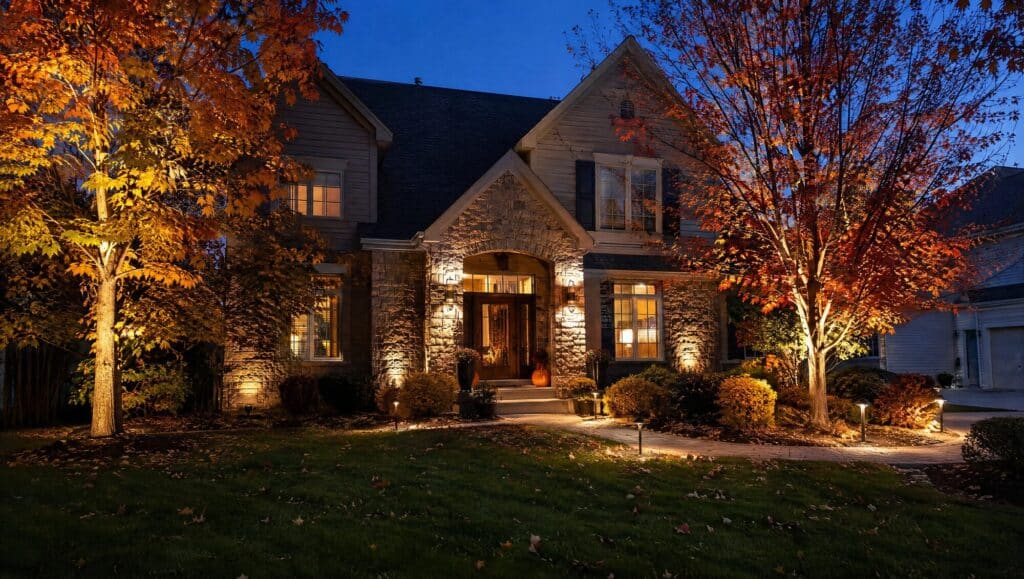
Clocks change twice a year. Your lighting schedule should not need you to change it.
Daylight saving time ends at 2 a.m. on Sunday, November 1, 2026. Indiana observes the change statewide, so that evening sunset in Fishers jumps about an hour earlier on the clock. Every fall we hear from homeowners whose lights now come on after dark or shut off while guests are still outside. The fix is usually simple.
Most landscape lighting uses one of three controls:
With sunsets around 5:30 p.m. in early November and earlier still by December, a dusk to 11 p.m. schedule means about six hours of light. Many homeowners keep accent lights on until bedtime and leave a few path or entry lights on later for safety.
Coach lights, holiday lights and porch lights on their own timers all need the same attention. Getting everything on one schedule saves a lot of fiddling.
Do landscape lighting timers adjust for daylight saving time? Some do and some do not. Astronomical timers and many smart transformers adjust automatically. Basic timers often need resetting.
What is an astronomical timer? A control that calculates sunrise and sunset for your location each day, so lights come on at dusk all year without adjustment.
Why did my landscape lights stop turning on at dusk? Often a blocked photocell, a timer that lost its setting after a power outage, or a smart control that dropped off Wi-Fi.
Lite Outdoor installs and upgrades outdoor lighting in Fishers, including transformers and controls that keep schedules right all year. Call 317-893-2590.


