
Menu
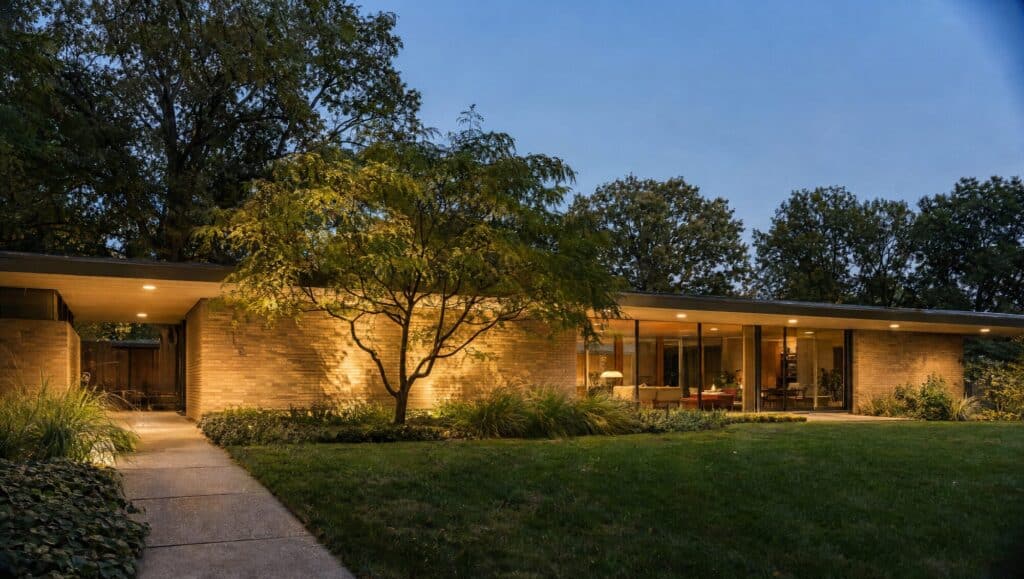
Columbus has some of the best modern architecture in the country. Mid-century homes deserve lighting that respects what their designers were going for.
Columbus is a special place for anyone who cares about buildings. Thanks largely to industrialist J. Irwin Miller and the Cummins Foundation architecture program, the city has an extraordinary collection of modern design. The American Institute of Architects once ranked it the sixth most architecturally important city in the United States. Eero Saarinen's Miller House is often mentioned alongside Fallingwater and the Farnsworth House as one of the country's great modern residences.
That influence shows up all over town, including in plenty of mid-century and modern homes on quiet residential streets. These houses have a very particular look, and lighting them well takes a slightly different approach than a traditional two-story colonial.
Mid-century modern homes tend to be low and horizontal, with flat or gently sloped roofs, deep overhangs and big walls of glass. Many use natural materials like brick, wood and stone. Writer Matt Shaw has described the Columbus version as a softer modernism built with brick and natural materials, and that's a good way to think about lighting it too.
The design is about clean lines, the connection between inside and outside, and the landscape being part of the house. Lighting should support all of that, not compete with it.
Mid-century homes look best with restrained lighting. A traditional home might handle a lot of fixtures and dramatic uplighting. A modern home usually looks best with fewer lights, carefully placed. The fixtures themselves should be simple and as invisible as possible during the day.
The long, low roofline is often the defining feature of a mid-century home. A few techniques work well here:
Our architectural lighting and wall lighting pages show how we handle masonry and facades.
Big windows are a big part of the appeal, and they're tricky at night. When the interior is lit and the outside is dark, those windows become black mirrors from inside. A little light in the landscape just outside the glass lets you see out at night, which keeps that indoor-outdoor connection alive after sunset.
From the street, the opposite matters. A softly lit landscape around the house helps the glowing windows feel balanced instead of like a lit box sitting in a dark yard.
Mid-century landscapes are often fairly simple: a few sculptural trees, ground covers, ornamental grasses, maybe a courtyard or atrium. Light a couple of strong tree forms, wash a low planting bed, and let the rest stay dark. Silhouetting a tree against a lit wall can be especially striking on a modern home.
Modern doesn't have to mean cold. Warm white light around 2700K brings out the warmth of wood, brick and stone, which is what Columbus modernism is known for. Cool white tends to make these homes feel sterile.
On a modern home, visible fixtures stand out more. Low-profile, dark finish fixtures that disappear into planting beds are usually the right call. In-grade well lights can be a good option where a surface-mounted fixture would interrupt a clean edge.
Lite Outdoor designs and installs outdoor lighting in Columbus and south central Indiana, including Bloomington. See more on our Columbus outdoor lighting page or browse our outdoor lighting services. Whether your home is a mid-century original or a modern new build, we'd love to help you light it well.
Request a free estimate or call 317-893-2590.


